
Bad Art Days
The importance of a creative 'growth mindset' when you're starting out (and beyond!)


Yup, we’ve all had ‘em!
Those days when your brain and hands aren’t communicating and whatever you produce looks like it’s been on a hot wash in the washing machine.
Possibly for a few cycles.
And definitely NOT in a good way.
“That’s it!”, you reckon, “I’m completely and utterly rubbish! I’m going to pack this in, flog my art materials and move to a Hebridean shack where I shall grow vegetables and live a solitary lifestyle surrounded by pigmy goats”.
Hmmm on second thoughts, that actually sounds rather lovely!
BUT what to do when you’re on the edge of total meltdown and about ready to call it quits?
Well firstly know that you’re not alone, we’ve all been there! More regularly than we’d like to admit.
And this is especially true when you’re starting out and you’re trying to learn: values, colours, composition, narrative, lighting, perspective, character’s poses and expressions…
AAARRRRGGGHHH!
All at THE SAME RUDDY TIME!
This, is exactly when attempting to channel a creative ‘growth mindset’ could pull us all back from the brink…
Sooooo ‘what is a growth mindset?’, we hear you all cry!
Well, a very clever lady (Carol Dweck) wrote a book in 2015 on human motivation after spending time studying the psychology of why some people succeed when others don’t.
After studying the way children coped with failure in school and what impact that had on their progress, she deduced that what mindset we adopt can significantly impact our learning and developing experience, as well as our future success.
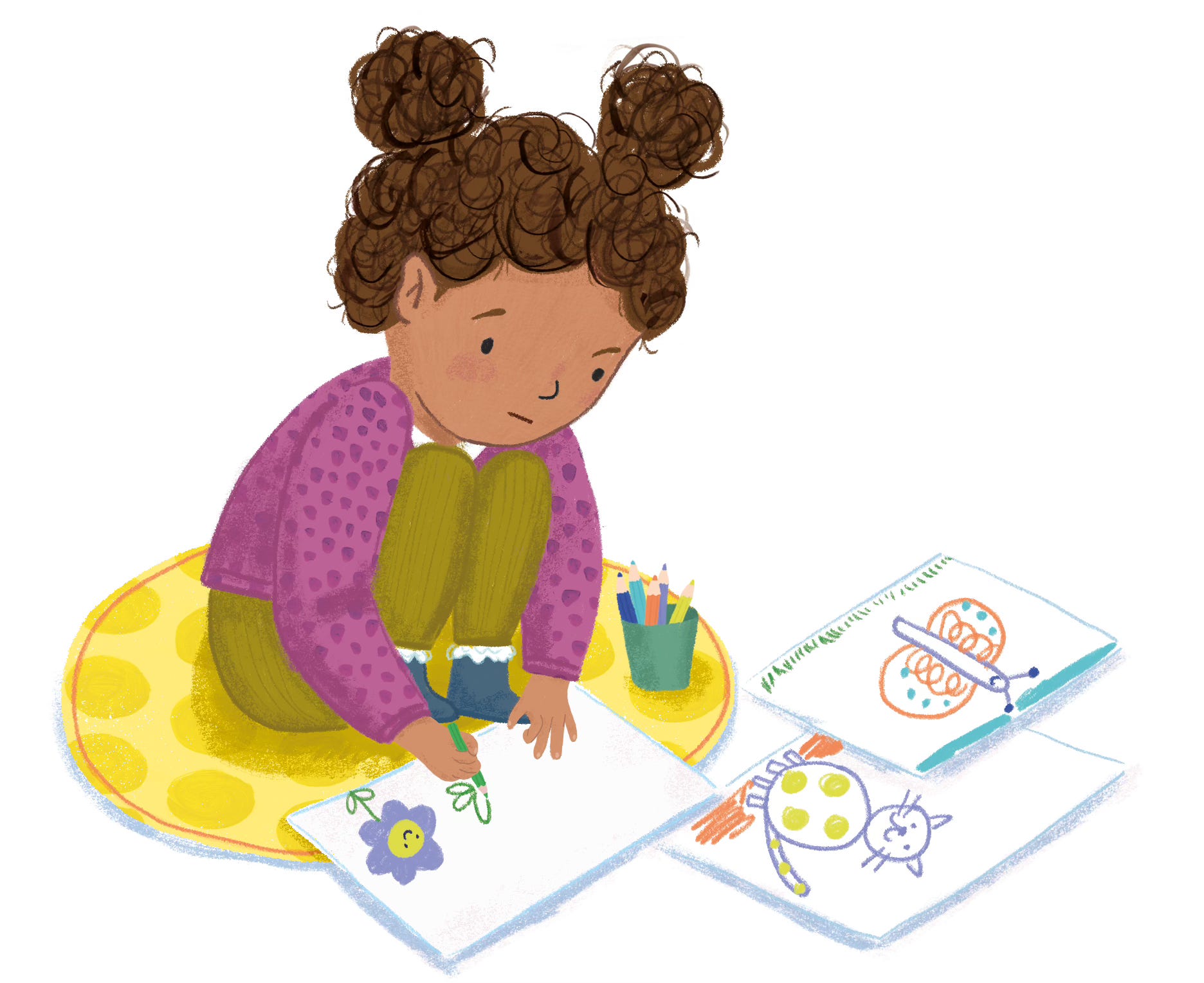
She coined the terms ‘growth mindset’ and ‘fixed mindset’.
It’s all very interesting to read about but for the purpose of this post we’ll pop a brief description of both below:
Fixed Mindset : The belief that our abilities/talents are ‘fixed’ traits we are born with and ones that cannot be significantly improved or changed. People with a fixed mindset tend to avoid challenges, give up easily, ignore useful feedback and feel threatened by the success of others.
Growth Mindset : The belief that talent and ability can be developed through dedication, hard work and perseverance. People with a growth mindset embrace challenges, persist in the face of setbacks, see failures as steps on the path to mastery and are more likely to achieve their goals as a result of their resilience and optimistic outlook.
So knowing that the latter camp are more likely to have successful outcomes, how do we get ourselves into that head space so we join the Growth Mindset crew too?
Well here are some suggestions of techniques we all try to use that will hopefully help to get your bum back on your seat at your work station, give you the motivation to power through the tough stuff and eventually lead you to creating work you are super proud to have produced.
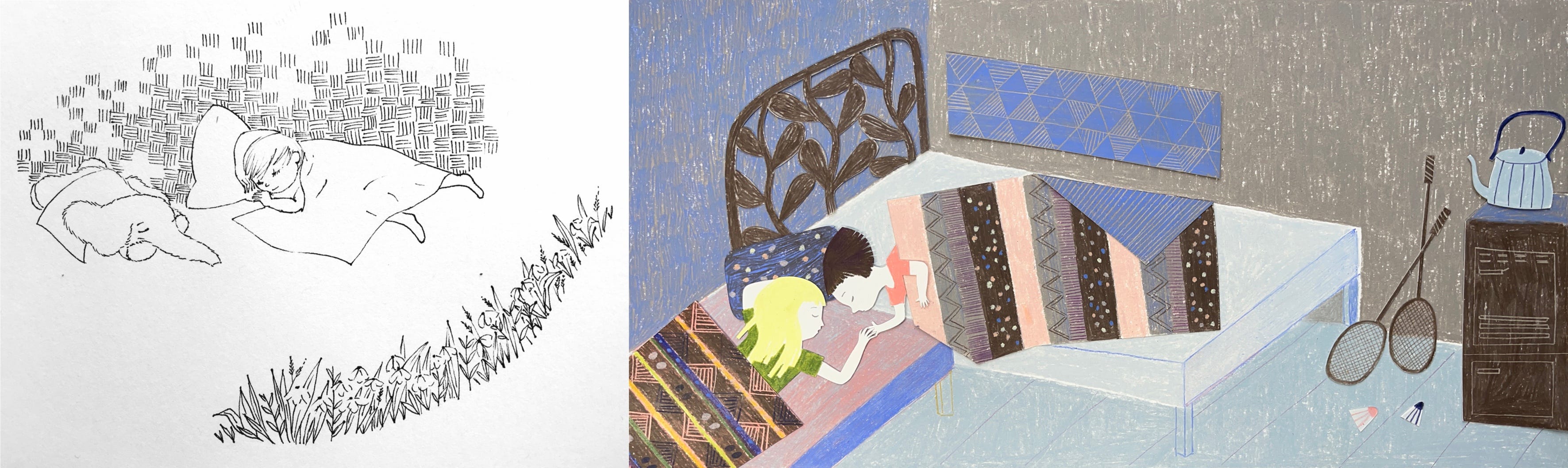
Look back at the progress you’ve made
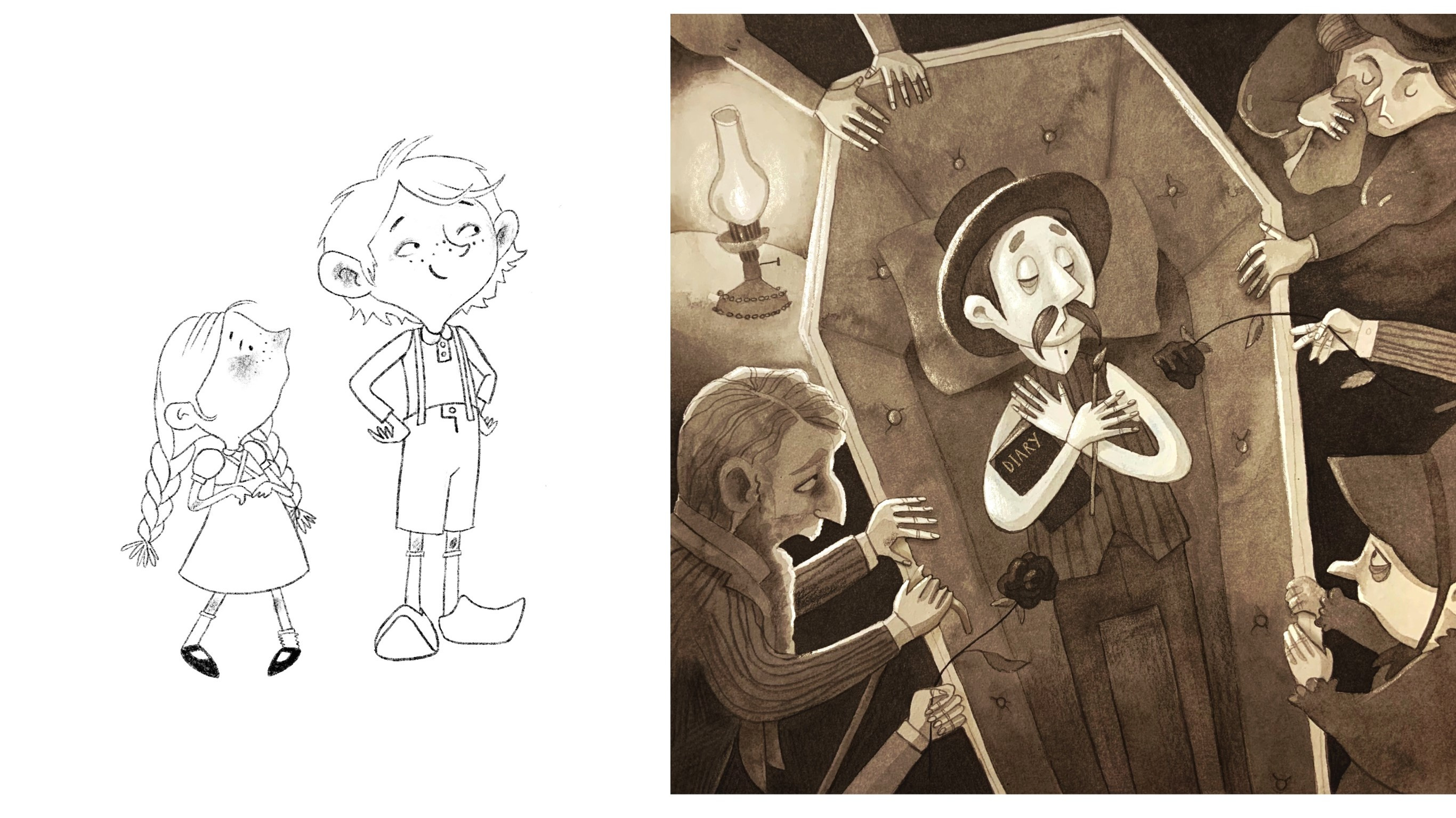
Sometimes when you’re in it, and the progress is gradual or one step forward, two steps back, it can feel that you haven’t actually moved forward at all. This is when looking back at where you started can really show you, visually, of the huge advances you’ve made. It might even shock you a bit just how far you’ve come. Ditto for scrolling down to the bottom of the Instagram feeds of artists you love, you’ll often be surprised at where they started. There are so many inspiring #artprogress videos on TikTok too.
And if those people can do it, why can’t we?
Scroll up and down this post to have a look at our collective member’s progress over the years…
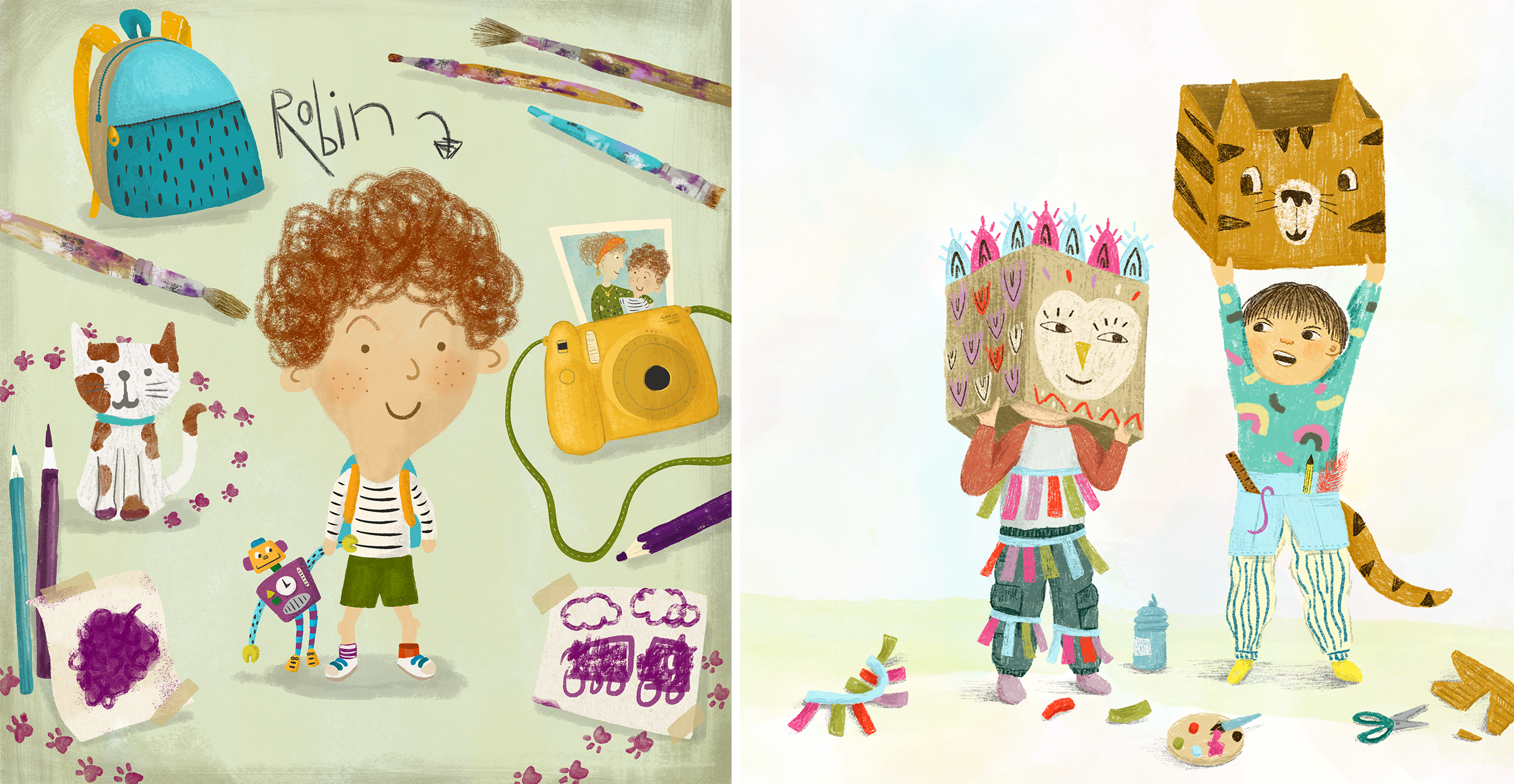
Keep a sketchbook and prioritize progress and experimentation over perfection
Don’t worry if it’s messy, don’t worry if it’s unfinished. Don’t worry if it’s so horrendous it looks like your cat has sneaked into your work space and covertly vomited on your page. Try to view every terrible picture as 1 image closer to finding your creative voice and mastering your craft. Experiment and give yourself permission to make mistakes. Some of those mistakes may end up being very happy ones, you might find a new technique that takes you on a different track with your work entirely. Learn from the things you don’t like too and focus on the things you do… ‘that character might be horrendous, but those fingers are expressive and fabulous/ I hate the way I’ve drawn all of that foliage but that one tree there, there’s something in that’…
Top tip: Date your pages and again, look back at how far you’ve come!
Get inspired
Listen to motivational podcasts, amazing children’s books or uplifting music while you’re working. Take 10 mins out of your day to pin or save some beautiful art that gives you a fire in your belly, inspires you and gets you excited to create your own.
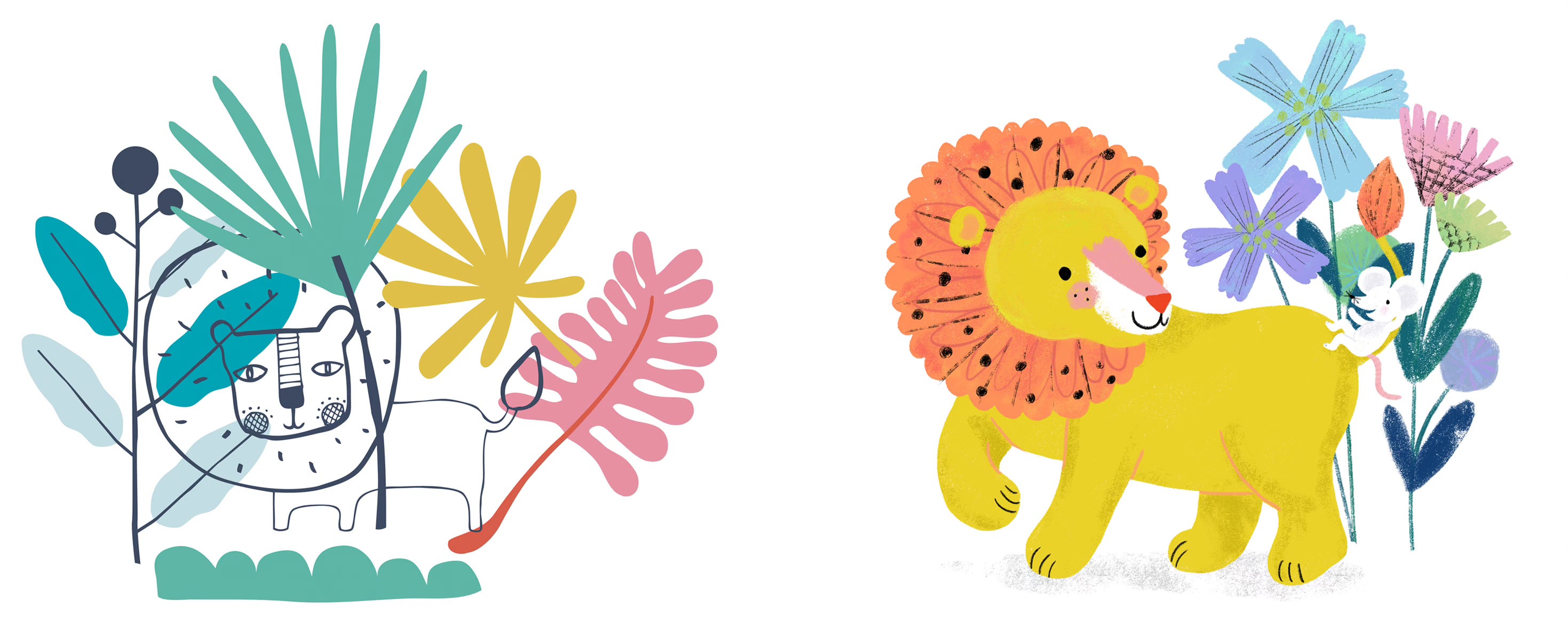
Trust the process and commit to practice
If you practice your art WILL improve. And if you can focus your practice, better still; you hate drawing hands, force yourself to draw them. Draw them regularly until you find you suddenly don’t hate them so much. We don’t like drawing things that we aren’t comfortable or confident with but there’s only one way to overcome that hurdle! Maybe join a 100 day drawing challenge and look at the progress you’ve made in that time.
Take a walk or nap
If it’s all getting too much, walk away from your work for a while. Take some time to decompress until you can have a word with yourself and find the resilience and positivity to return and move forward with it. And quite often when you return to it with ‘fresh eyes’, it’s not half as diabolical as you thought it was anyway!
We know this is all far easier said than done. With the prevalence of and easy access to social media, it is incredibly hard not to constantly compare ourselves to other people, to believe their careers come easily to them and their successes are down to an innate talent that we sadly haven’t been blessed with. But we don’t see their journeys, or the thousands of terrible drawings they’ve produced, or the meltdowns they almost had!
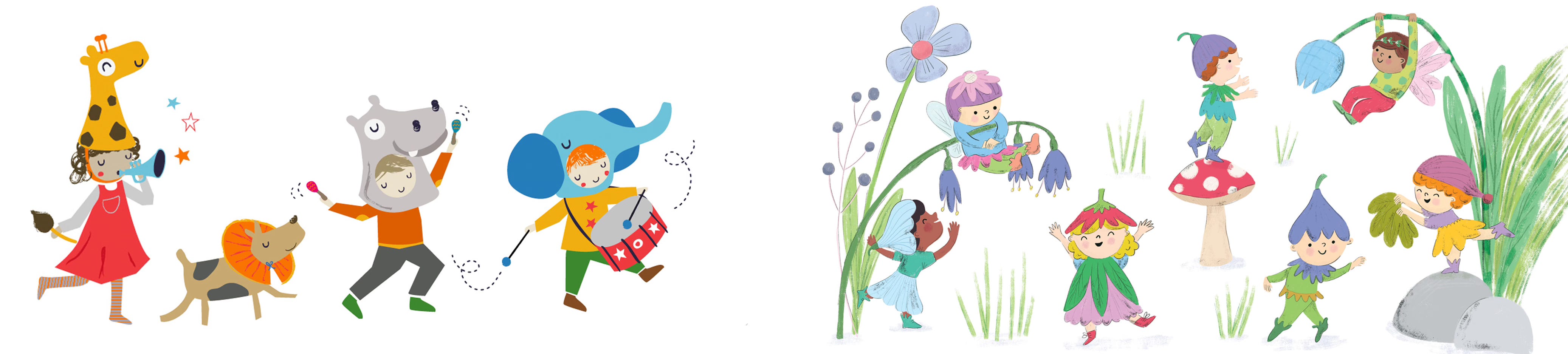
And knowing that the evidence suggests that if we can try to implement a growth mindset when we are creating our own work, if we can train ourselves to become resilient and view every doodle, every sketch, every terrible, terrible mess of a drawing and every masterpiece we’re beyond shocked we’ve created as a chance to learn, grow and evolve, we are far more likely to succeed!
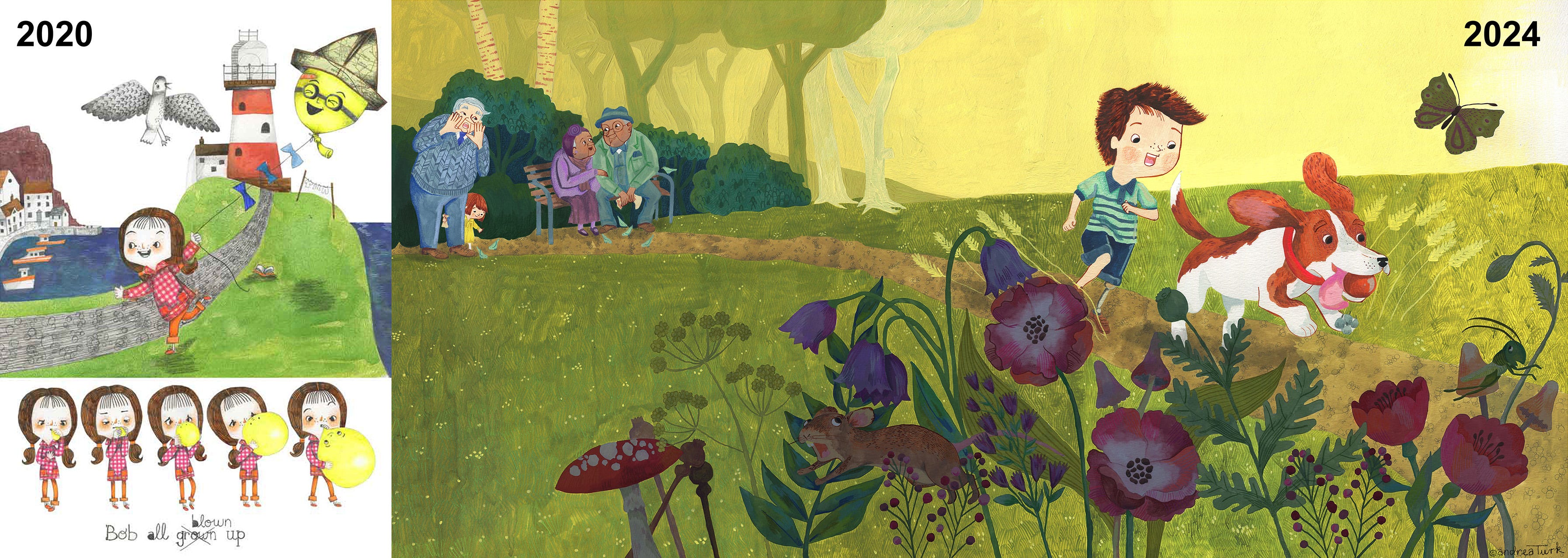
So here’s to digging deep and pushing through the hard stuff and holding on to the faith that if we continue to show up and do that, we will get better and hopefully, because of that, we might just one day make all of our arty dreams come true!
xx
Some things I like to do when I have a Bad art day (or week) is to first TAKE A BREAK, then redo an old illustration and sometimes when I feel like I somehow forgot how to draw (seriously, it's like I don't even remember how I draw the eyes or the mouth) is to copy my own style! I just look for some unfinished sketch and put some of my favorite illustrations aside and try to COPY MYSELF.
Once I realize that no, I didn't forget how to hold a pencil, I always feel so inspired to continue and keep creating!